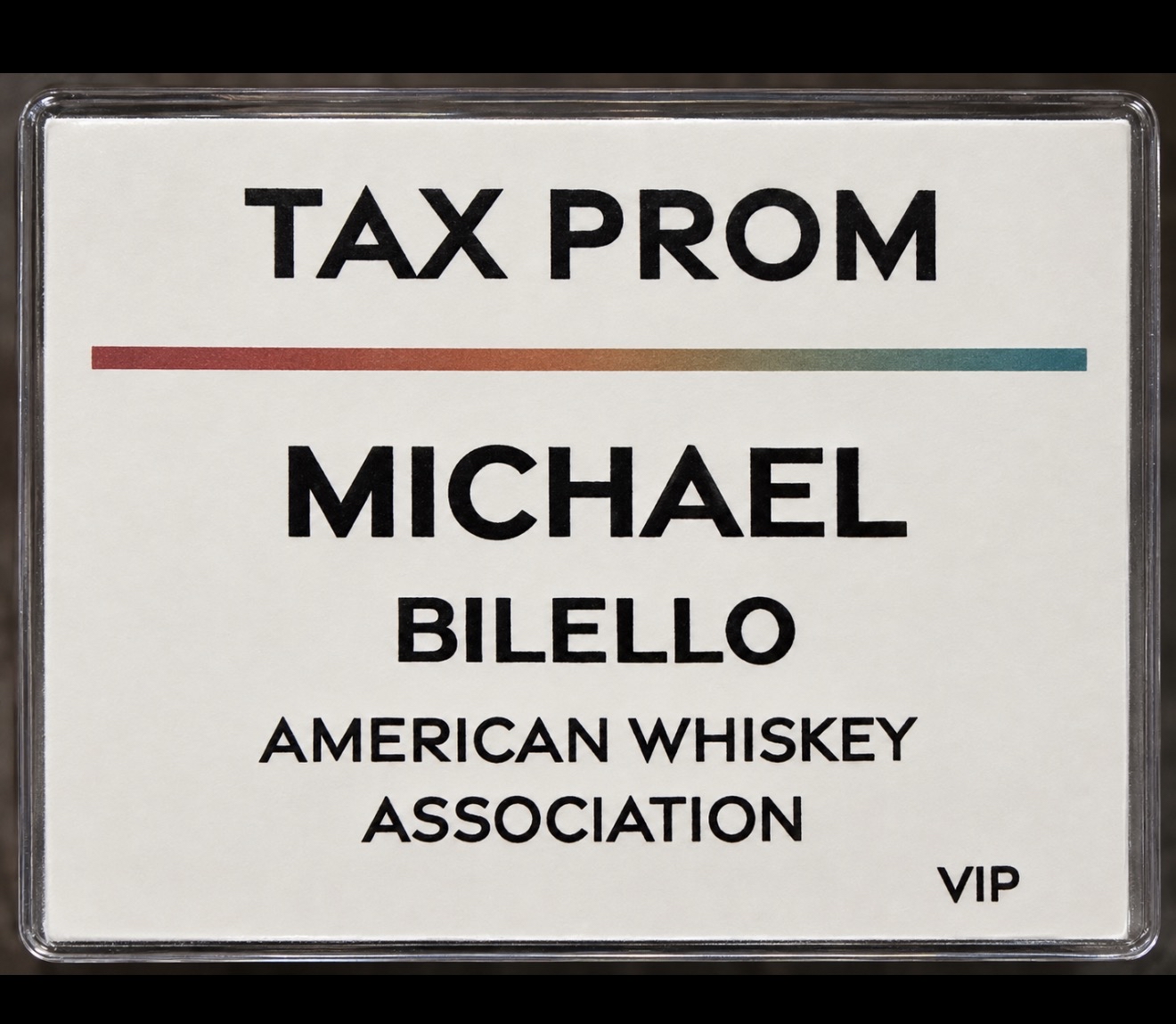
Tax Prom 2026: A Night of Celebration, a Reminder of Why Tax Policy Matters
By Michael Bilello, President & CEO, American Whiskey Association November 20, 2026 Washington has...
Read more

Why today’s whiskey inventories could help shape tomorrow’s innovation, new expressions, and global growth.
By Michael Bilello | President & CEO, American Whiskey Association
November 16, 2026
American whiskey has always required something the modern marketplace doesn’t always reward: patience.
Every barrel aging in a warehouse represents a decision made years ago, an investment in craftsmanship, and a belief that consumers will continue to seek out one of America’s most distinctive products.
Lately, however, those barrels have become the subject of considerable media attention.
Recent reporting, including The Wall Street Journal’s examination of global spirits inventories, has raised legitimate questions about shifting consumer demand, production levels, and the financial implications of aging whiskey stocks.
These are important conversations. But they deserve something more than a headline or an inventory-to-sales ratio.
Because in American whiskey, what’s inside the barrel, how long it has aged, and what it might become are often more important than the number of barrels themselves.
That was a central theme of my recent conversation with longtime spirits journalist Joe Micallef, published November 14 in Forbes, titled Michael Bilello on the State of the American Whiskey Industry.
Our discussion explored the industry’s current market adjustment, the economics of aging whiskey, and why today’s maturing inventories may help create tomorrow’s opportunities.
American whiskey operates on a fundamentally different timeline from many other consumer products, including other beverage alcohol categories.
A whiskey produced today may not reach consumers for four, six, eight, twelve, or even twenty years.
That means distillers must anticipate demand years, sometimes decades, before a bottle reaches a shelf.
During the extraordinary growth of American whiskey over the past two decades, producers invested in expanded distilling capacity, warehouses, and aging stocks to serve an increasingly sophisticated domestic and international consumer.
The pandemic accelerated demand, while subsequent shifts in consumer behavior, inflation, and international trade disruptions complicated the outlook.
Today, American whiskey producers are adjusting production and managing inventories to reflect a more normalized marketplace.
That is responsible business management.
But it is equally important to recognize that not every aging barrel represents a surplus or a financial liability. Many are essential to existing brands, planned releases, premium offerings, and future consumer demand.
And some may ultimately become expressions that have yet to be imagined.
Perhaps the most exciting aspect of today’s aging inventories is what they could mean for American whiskey innovation.
Consider the possibilities.
Additional maturation time can create opportunities for expanded age statements, distinctive single-barrel selections, limited releases, and new premium expressions.
Master distillers and blenders may gain greater flexibility to experiment with different age profiles, mash bills, barrel characteristics, and blending techniques.
Producers can explore new flavor profiles, develop creative finishes where permitted, and bring forward whiskeys that offer consumers something different from traditional flagship expressions.
For established distillers, this flexibility can strengthen iconic brands while introducing consumers to new experiences.
For craft distillers, access to increasingly mature stocks may help establish distinctive identities, reward years of patient investment, and create new reasons for enthusiasts to explore their products.
Innovation is also expanding beyond the traditional whiskey bottle.
Ready-to-drink cocktails, new serving occasions, and changing consumer preferences are encouraging producers to explore additional ways to introduce American whiskey to consumers.
Today’s maturing whiskey could become tomorrow’s award-winning expression, a new age-stated favorite, or an entirely new way for consumers to enjoy American whiskey.
There are no guarantees, of course. Not every barrel improves indefinitely with age, and producers must make careful decisions about maturation, quality, and commercial demand.
But time, expertise, and thoughtfully managed inventory create options.
In an industry built on patience and craftsmanship, those options have real value.
The Wall Street Journal’s reporting has drawn attention to inventory-to-sales ratios as one indicator of financial exposure among global beverage companies.
That metric has value, but it cannot tell the complete story.
A producer selling primarily vodka or gin, which can generally reach the market relatively quickly, operates under a very different production model from a distiller whose whiskey requires years of maturation.
Comparing their inventories without accounting for those differences risks overlooking the economics of aged spirits.
Similarly, two barrels of whiskey may have dramatically different commercial potential depending on their age, quality, provenance, intended use, and eventual market.
Accounting values are not necessarily equivalent to the potential finished-product value of a mature, branded whiskey.
None of this means inventory challenges should be dismissed. Excess stocks can create meaningful financial pressures, and individual companies face different circumstances.
Rather, we should recognize that American whiskey requires more sophisticated analysis than treating all barrels, brands, and production cycles as interchangeable.
As additional reporting examines our industry, I hope journalists, analysts, and consumers will look beyond aggregate barrel counts to consider the age, quality, purpose, and long-term potential of those inventories.
That approach provides a more complete and accurate picture of the industry’s health.
The opportunities created by maturing inventories extend well beyond America’s borders.
American whiskey is an important U.S. agricultural and manufacturing success story, connecting farmers, distillers, cooperages, transportation providers, hospitality businesses, and communities across the country.
It also represents approximately 54% of U.S. spirits export value.
And while domestic demand has moderated, international markets offer significant long-term opportunities.
Growing consumer interest in whiskey, cocktail culture, premium spirits, and authentic American products creates promising possibilities in markets such as India and elsewhere around the world.
That is why the American Whiskey Association is working to remove tariffs, address discriminatory trade barriers, and expand market access.
The ability to introduce appropriately aged American whiskey to new consumers overseas could become an increasingly important competitive advantage.
Our industry’s long production cycle means that today’s barrels may help serve tomorrow’s international markets.
The whiskey is aging. Our job is to help open the markets where its next consumers will be.
There is no question that American whiskey faces challenges.
Consumer preferences are evolving. Producers are exercising greater discipline. Inventory levels require careful management, and some businesses will face difficult adjustments.
We should acknowledge those realities openly.
But we should also recognize the extraordinary strengths that distinguish American whiskey: a rich American heritage, generational craftsmanship, product diversity, deep agricultural connections, and a remarkable capacity for innovation.
The industry has experienced market cycles before. It has also demonstrated an ability to adapt, innovate, and introduce new generations of consumers to bourbon, rye, Tennessee whiskey, American single malt, and other distinctive expressions.
As future articles, television segments, and industry analyses examine whiskey inventories, I encourage a broader conversation about what these barrels represent and what they may become.
Look at the innovations emerging from our distilleries. Look at the new expressions reaching shelves. Look at the consumers discovering different ages, styles, and flavor profiles. And look at the international opportunities still ahead.
Because the story of American whiskey is not simply about how much whiskey we have.
It’s about what we can create with it.
For American whiskey enthusiasts, today’s market adjustment could ultimately bring an exciting new era of discovery.
More distinctive releases. New expressions. Greater opportunities to explore age, character, craftsmanship, and innovation.
For producers, the road ahead will require sound judgment, disciplined planning, and continued investment in the consumer.
For the American Whiskey Association, our mission remains clear: Make American whiskey the world’s whiskey.
And for everyone watching our industry, I would offer one final thought:
Don’t judge the future of American whiskey simply by counting the barrels. Consider the possibilities aging inside them.
The next great American whiskey expression may already be resting quietly in a warehouse.
And that’s a future worth raising a glass to.
Related Coverage
By Michael Bilello, President & CEO, American Whiskey Association November 20, 2026 Washington has...
Read more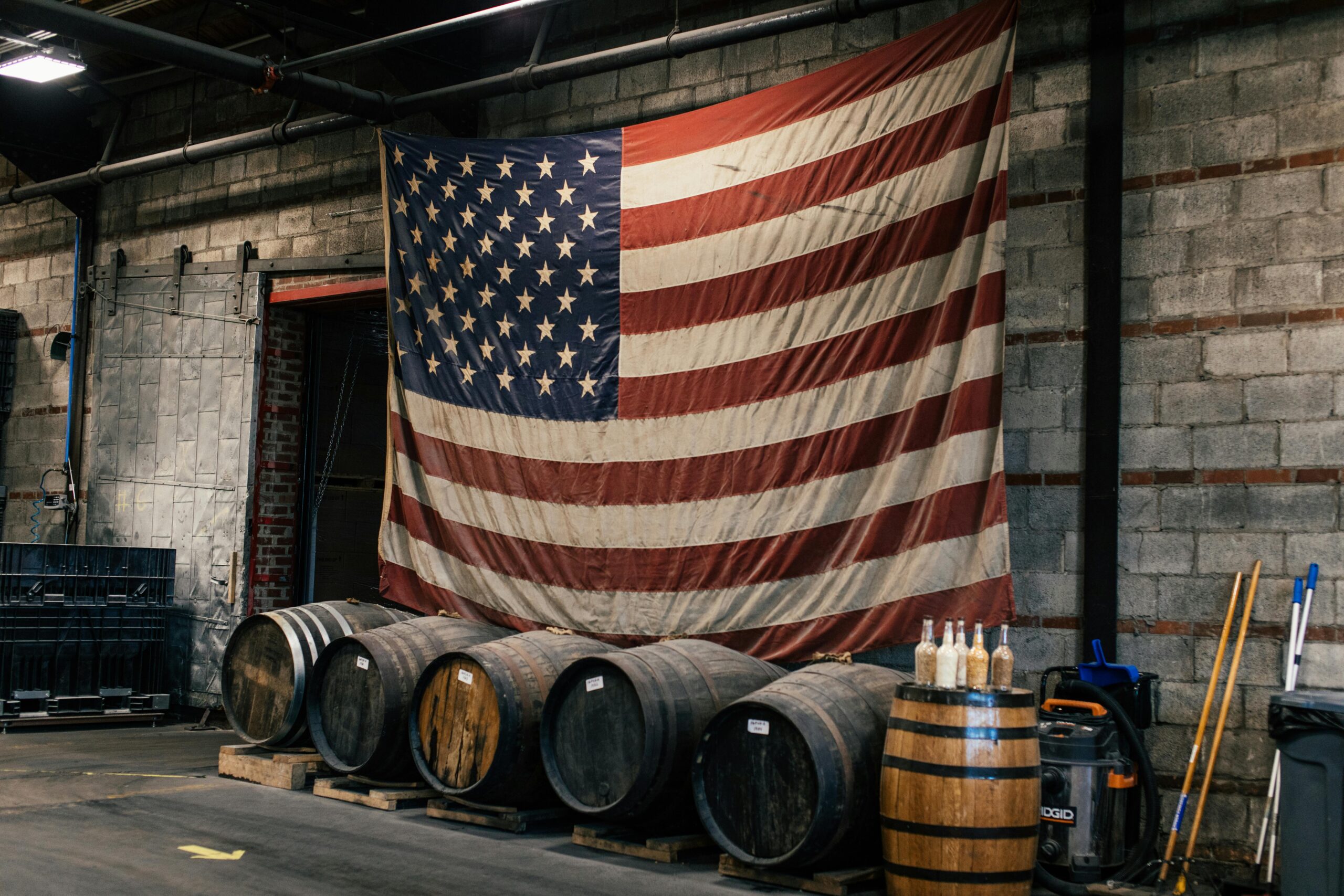
Submission identifies obstacles across 17 international markets and calls for fair, predictable trade policies...
Read more