The American Whiskey Summer
Awareness, Advocacy, and the Next Chapter for America’s Native Spirit By Michael Bilello, President...
Read more

As a lifelong student and practitioner of public policy, I have learned that the best insights often come from listening — to policymakers, regulators, law enforcement officials, industry leaders and experts working across different markets and political systems.
Through years of travel, meetings and briefings, one global truth about alcohol policy has become increasingly clear: when legal alcohol is taxed, restricted or regulated beyond reason, the illicit market wins.
That is not an ideological statement. It is a public policy reality.
I am fortunate to receive outstanding briefings from colleagues and fellow members of the World Spirits Alliance, whose studies, data and commitment to addressing illicit alcohol trade deserve real recognition. Their work reinforces what responsible alcohol industry leaders, public officials and enforcement authorities around the world see every day: illicit alcohol is not a theoretical problem. It is a direct threat to consumers, governments, legitimate businesses and public safety.
According to the World Spirits Alliance, illicit alcohol takes many forms — counterfeit products, smuggled alcohol, tax leakage, illicit artisanal production and surrogate alcohol not intended for human consumption. The report estimates that 26% of alcohol consumption is illicit across the studied markets and that governments lose roughly $8.9 billion in fiscal revenue every year due to illicit alcohol.
Those numbers should get the attention of anyone serious about alcohol policy.
Too often, alcohol tax increases are presented as an easy revenue solution. But there is no free lunch in public policy — and certainly no free pour. Excessive taxes may deliver a short-term government revenue grab, but they can create far greater immediate and long-term costs: public health risks, consumer safety threats, lost legitimate business activity and new opportunities for criminal networks.
The World Spirits Alliance report is clear on the drivers. High import tariffs and domestic taxation that are not adapted to local market conditions can create price gaps between legal and illicit products. Those gaps give illicit operators room to undercut responsible businesses, avoid taxes and offer consumers cheaper — and often unsafe — alternatives.
The consequences are not abstract.
Illicit alcohol can expose consumers to counterfeit or adulterated products that do not meet quality standards. In the most serious cases, unsafe alcohol can cause blindness, poisoning or death. For governments, illicit trade means lost revenue, increased enforcement burdens, higher health costs and a less attractive market for legitimate investment. For responsible businesses, it means reputational risk, lost sales and unfair competition from actors who follow no rules because they operate outside the law.
It also funds criminals. The WSA report notes that illicit alcohol often generates revenue for criminal networks that use those proceeds to support other illegal and dangerous activities. That should matter to policymakers across the political spectrum. This is not simply an industry concern. It is a public health, public safety and rule-of-law concern.
The policy lesson is straightforward: governments should support legal, licensed and regulated markets — not unintentionally push consumers toward the shadows.
That does not mean alcohol should be untaxed or unregulated. Responsible industries understand the need for appropriate regulation, fair taxation and strong enforcement. But policy must be calibrated to reality. When taxes or restrictions make legal products too expensive, too inaccessible or too difficult to bring to market, illicit suppliers are waiting. They do not check IDs. They do not pay taxes. They do not follow labeling rules. They do not invest in safety, quality, jobs or communities.
They just take the market.
The WSA report recommends non-discriminatory fiscal systems with rates set at levels that avoid incentivizing illicit traders, while still meeting public authorities’ objectives. It also urges governments to avoid excessive taxes and barriers that make legitimate products too expensive or inaccessible, and to strengthen enforcement, customs coordination, penalties, traceability and public-private cooperation.
That is the right framework.
For American whiskey, this issue matters because our industry is built on authenticity, quality, legal compliance and trust. From farmers and barrel makers to distillers, warehouse workers, distributors, retailers, restaurants and bars, the legal American whiskey ecosystem supports jobs, investment and responsible growth. It also depends on access to fair, rules-based markets at home and abroad.
When governments impose excessive taxes, punitive tariffs or restrictions that distort consumer choice, they do not eliminate demand. They often redirect it. And when demand is redirected away from the legal market, the winners are not public health officials, treasuries or responsible businesses. The winners are smugglers, counterfeiters and criminal networks.
That is why smart alcohol policy should be grounded in evidence, not slogans. It should recognize the difference between responsible regulation and counterproductive overreach. It should protect consumers by strengthening legal markets, improving enforcement and ensuring that adult consumers who choose to drink have access to safe, authentic, regulated products.
The World Spirits Alliance and its members deserve credit for continuing to elevate this issue with serious research, global data and practical policy recommendations. Their work is a reminder that the fight against illicit alcohol is not just about protecting brands or markets. It is about protecting people.
Policymakers should take note: excessive alcohol taxes may look attractive on a budget spreadsheet, but in the real world they can produce a dangerous tradeoff — short-term tax revenue in exchange for long-term public health risks, consumer safety threats and criminal profit.
That is a bad bargain.
The better path is clear: fair taxation, strong enforcement, open and legal trade, and a commitment to regulated markets that protect consumers, support legitimate businesses and deny criminals the opportunity to profit.
That is not just good alcohol policy. It is good public policy.
Michael Bilello
President & CEO
American Whiskey Association
801 Pennsylvania Ave. NW, Suite 612
Washington, DC 20004
Awareness, Advocacy, and the Next Chapter for America’s Native Spirit By Michael Bilello, President...
Read more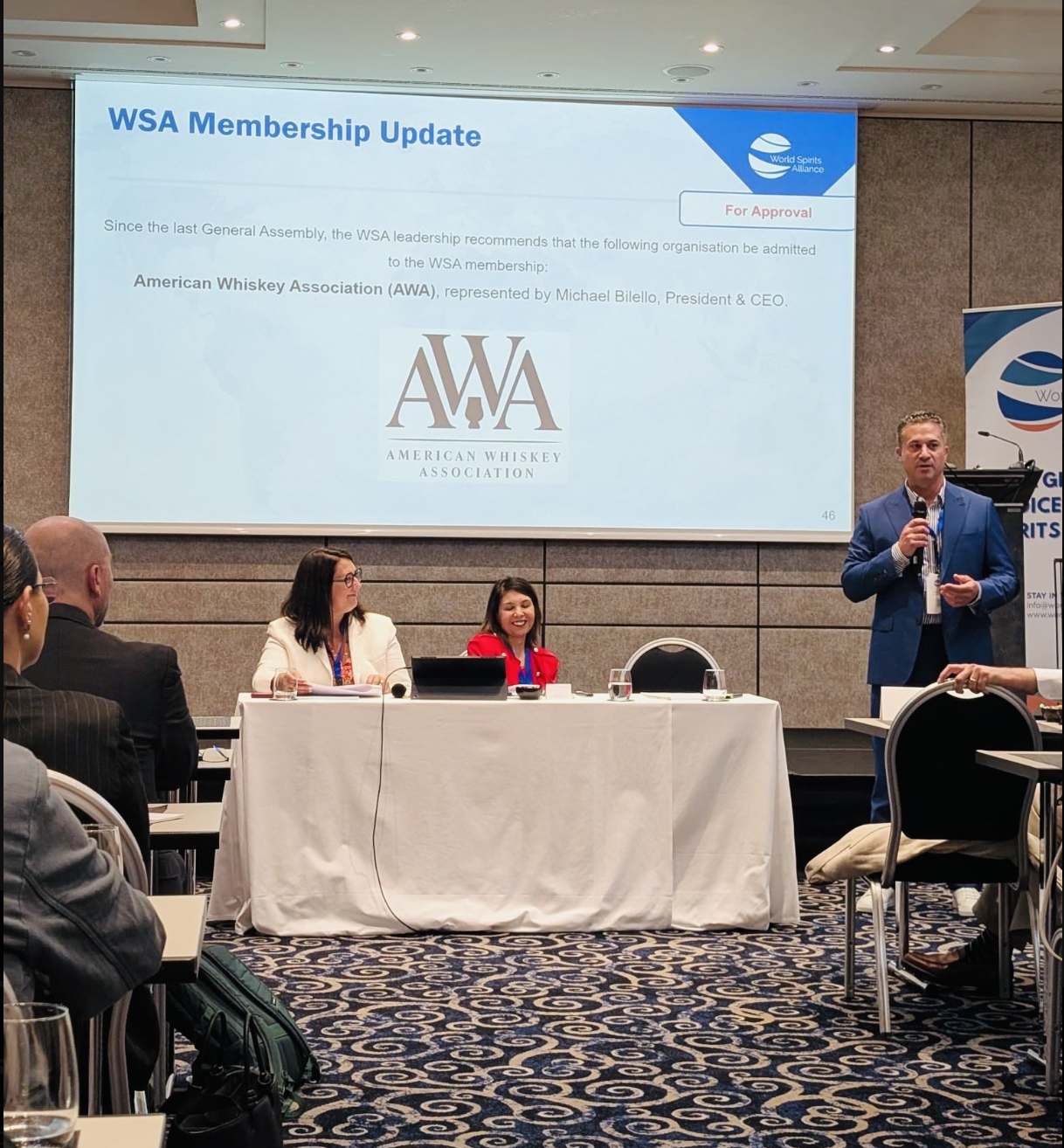
AWA President and CEO Michael Bilello participates in high-level discussions on trade, market access,...
Read more