
American Whiskey Association’s Michael Bilello to Visit Warsaw and Berlin, Advance Export Growth and Fair Market Access
Poland is an increasingly important market for American whiskey; Berlin visit comes amid industry...
Read more
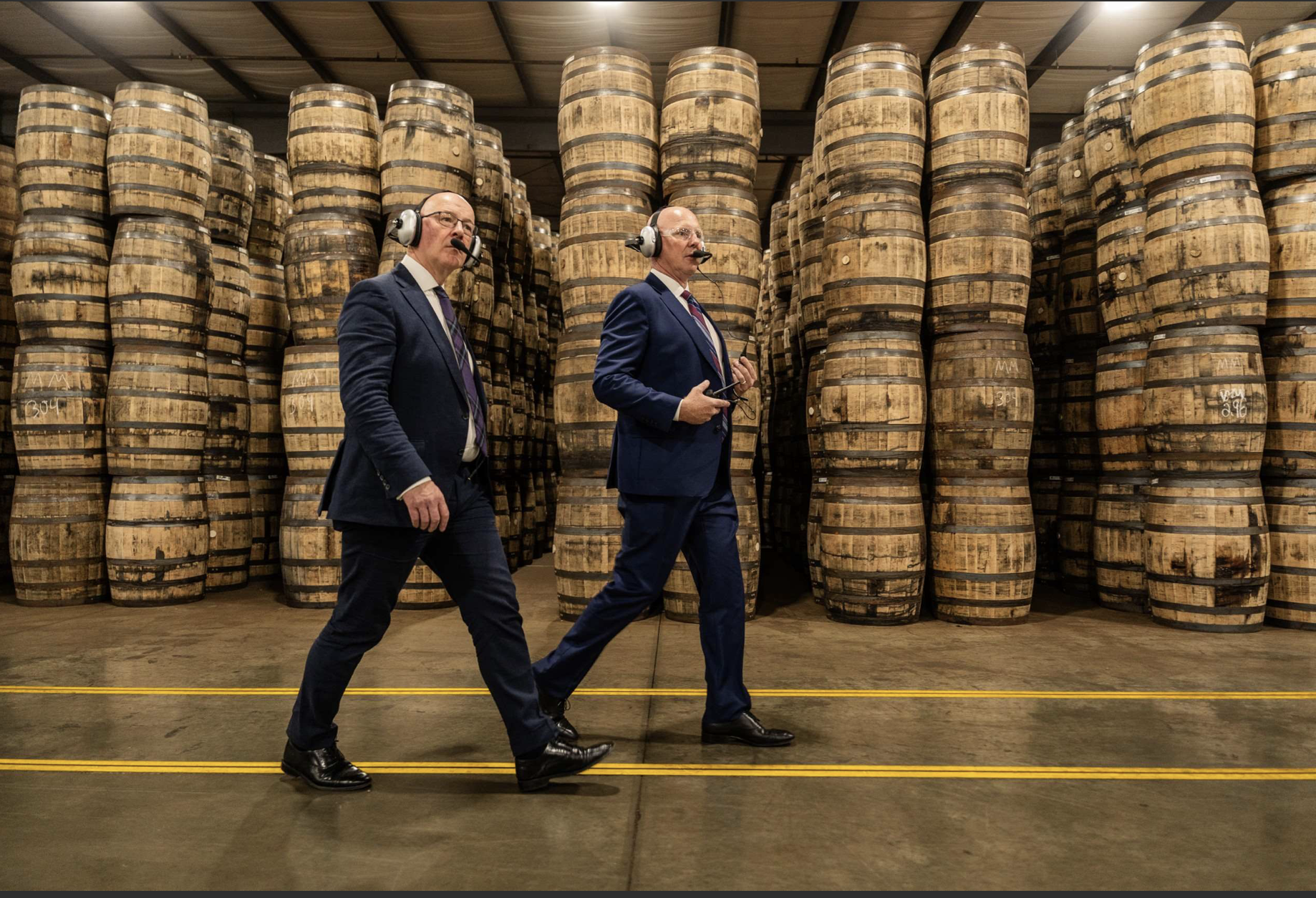
When Scotland’s First Minister John Swinney visited Independent Stave Company’s Kentucky Cooperage and Kentucky Bourbon Barrel in Lebanon, Kentucky, he saw something that matters far beyond one company, one category or one country.
He saw the world’s whiskey ecosystem at work.
American oak. Kentucky craftsmanship. Family-owned manufacturing. Skilled cooperage. Global spirits trade. The quiet, essential work behind every barrel.
Independent Stave Company is a fourth-generation, family-owned business with more than 110 years of history. Its new and used cooperage operations are part of a broader American supply chain that supports distillers and winemakers around the world, including Scotch whisky producers who rely on high-quality American oak barrels as part of their maturation process.
That connection is why open, fair spirits trade matters.
Tariff relief for Scotch whisky is not just good for Scotland. It is good for Kentucky. It is good for American cooperages, barrel makers, forestry, logistics providers, distillers, hospitality businesses and the workers behind every barrel.
Too often, spirits trade disputes are discussed as if they affect only the finished bottle. That misses the point. Whiskey is a global category, but it is built through deeply connected local supply chains. An American-made barrel shapes the character of a Scotch whisky enjoyed in London, Tokyo, Singapore or New York. A trade barrier aimed at one product can ripple across cooperages, rural manufacturers, warehouses, ports, restaurants, retailers and consumers.
That is the real-world importance of fair trade.
American whiskey and Scotch whisky are competitors in the glass, but they are also partners in the broader global whiskey economy. The same American oak, barrel expertise, logistics networks, hospitality venues and consumer enthusiasm help support both categories. When trade works, the entire ecosystem benefits.
For American whiskey, this moment also reinforced a larger truth: Our category belongs at the center of global spirits diplomacy.
American whiskey is an agricultural product, a manufacturing product and a cultural export. It supports farmers, grain producers, cooperages, distillers, warehouse teams, logistics providers, wholesalers, retailers, restaurants, bars, tourism and hospitality. It is made in communities across the United States and increasingly enjoyed around the world.
That is why the American Whiskey Association continues to advocate for open markets, fair treatment and strong trade relationships that allow American whiskey to compete globally.
Independent Stave Company’s work is a powerful reminder that the barrel economy is not abstract. It is skilled labor. It is family business. It is rural manufacturing. It is American oak. It is export competitiveness. It is part of the story behind both American whiskey and Scotch whisky.
First Minister Swinney’s visit was an opportunity to celebrate that connection.
It was also an opportunity to recognize that good trade policy does more than remove barriers. It strengthens relationships. It supports jobs. It gives producers, suppliers and hospitality partners the confidence to invest for the long term.
From American oak to Scotch whisky maturation, from Kentucky cooperages to global consumers, the message is clear: Open, fair trade strengthens the entire whiskey ecosystem.
And that is worth raising a glass to.
Poland is an increasingly important market for American whiskey; Berlin visit comes amid industry...
Read more
“Made in America. Made for the World.” effort will amplify bourbon’s heritage, American agriculture...
Read more